Solar Panels: Types and Technologies
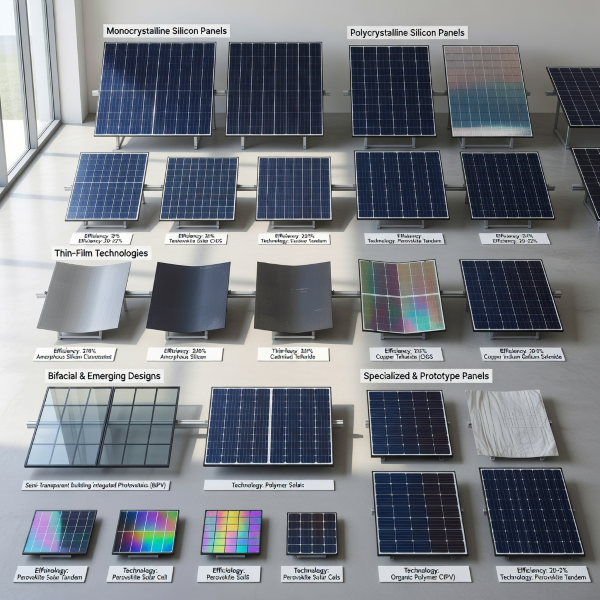
Solar panels come in three main types: monocrystalline, polycrystalline, and thin-film.
Monocrystalline panels are the most efficient and long-lasting, polycrystalline panels are more affordable but slightly less efficient, and thin-film panels are lightweight and flexible but require more space. The techonology of solar panels is ever evolving, which is important to consider if you are wanting to expand over time.
Portable solar panels are ideal for mobility and small power needs, while large fixed panels are designed for homes, businesses, and high energy output.
Select what you are looking for using our Solar Panel Enquiry and let us source exactly what you need!
What Are the Different Types of Solar Panels?
Choosing the right solar panel starts with understanding the core technologies available. Each type has unique advantages depending on your application, budget, and available space.
1. Monocrystalline Solar Panels
Monocrystalline panels are made from a single, pure silicon crystal, allowing electrons to move more efficiently and generate more power.
Pros:
- High efficiency (typically 20–23%)
- Long lifespan (often 25+ years)
- Excellent performance in low light and high temperatures
- Requires less installation space
Cons:
- Higher upfront cost
- More complex manufacturing process
- Slightly higher material waste during production
Best for: Homes, commercial installations, and users who want maximum efficiency in limited space.
2. Polycrystalline Solar Panels
Polycrystalline panels are made from melted silicon fragments, making them more cost-effective to produce.
Pros:
- More affordable than monocrystalline panels
- Lower manufacturing waste
- Reliable performance for general use
Cons:
- Lower efficiency (around 13–17%)
- Requires more space for the same power output
- Slightly lower performance in high heat
Best for: Budget-conscious residential or commercial installations with ample space.
3. Thin-Film Solar Panels
Thin-film panels are made by layering photovoltaic material onto surfaces like glass, plastic, or metal. They are lightweight and flexible.
Pros:
- Lightweight and flexible
- Performs well in low-light conditions
- Ideal for irregular surfaces and portable use
Cons:
- Lower efficiency (often below 12%)
- Shorter lifespan (10–15 years)
- Requires significantly more space
Best for: Portable solar setups, large-scale industrial applications, or unconventional surfaces.
Emerging Solar Technologies
Beyond the traditional three types, newer technologies are improving performance:
- PERC (Passivated Emitter Rear Cell): Enhances efficiency by reflecting unused light back into the cell
- Bifacial panels: Capture sunlight from both sides, increasing total output
- Tandem and perovskite cells: Next-generation technologies aiming for higher efficiencies
These are becoming more common in premium and commercial installations.
Portable Solar Panels vs Fixed Solar Panels
One of the most common questions is whether to choose portable solar panels or fixed (large) solar systems.
Portable Solar Panels
Portable panels are compact, foldable, and designed for mobility.
Pros:
- Lightweight and easy to transport
- Quick setup with no installation required
- Ideal for camping, backup power, and off-grid use
Cons:
- Lower power output
- Less durable over time
- Not suitable for powering entire homes
Best for:
- Outdoor use (camping, caravans, marine)
- Emergency backup systems
- Small devices and battery charging
Have a look at some of the Portable options:
CTEK
Optimate
ECOFLOW
+ Additional brands as requested
Large Fixed Solar Panels (Residential & Commercial)
These are permanently installed systems, typically mounted on roofs or ground structures.
Pros:
- High power output for full energy needs
- Long lifespan and durability
- Better return on investment over time
Cons:
- Higher upfront installation cost
- Requires professional installation
- Fixed location (not portable)
Best for:
- Homes and businesses
- Industrial applications
- Long-term energy savings and load reduction
We offer Multiple Brands in all panel sizes, if you can't find what you are looking for just get in touch and we will do our best to source it for you!
How to Choose the Right Solar Panel
When selecting a solar panel, consider:
1. Available Space
Limited roof space favours high-efficiency monocrystalline panels.
2. Budget
Polycrystalline panels offer a balance between cost and performance.
3. Application
Portable setups benefit from thin-film or foldable panels.
4. Energy Needs
Full home systems require large, fixed installations with high output.
5. Climate Conditions
Some panels perform better in heat or low-light conditions.
There is no one-size-fits-all solar solution. The right choice depends on your specific needs:
- Monocrystalline: Best performance and longevity
- Polycrystalline: Cost-effective and reliable
- Thin-film: Flexible and portable applications
- Portable panels: Convenience and mobility
- Fixed systems: Maximum energy generation and long-term savings
Understanding these differences ensures you invest in a solar solution that delivers the best performance, efficiency, and return for your environment.
Which solar panel is best for home use?
Monocrystalline panels are generally the best choice due to their high efficiency and long lifespan.
Are portable solar panels worth it?
Yes, for small-scale or mobile use, but they cannot replace a full home solar system.
What is the cheapest type of solar panel?
Polycrystalline panels are typically the most affordable option.
Do thin-film solar panels last long?
They usually have a shorter lifespan than crystalline panels but are useful for flexible and portable applications.
Once choosing the panel that suits you, make sure you are mounting it correctly to get the most out of your panel, and make sure to include your solar checklist so that the full system compliments your panels.
Choosing the right solar panel can feel overwhelming with so many brands, technologies, and sizes available. One of the most important factors to consider, however, is your existing system. If you have already invested in an inverter, this will play a key role in narrowing down your options. Solar panels must be compatible with your inverter’s specifications, including voltage and power requirements, to ensure optimal performance, efficiency, and system reliability.
Get in touch with the MAL team to learn more about the inverter you purchased from us. We’ll help you understand your system and design a tailored solar solution that fits your exact needs.